

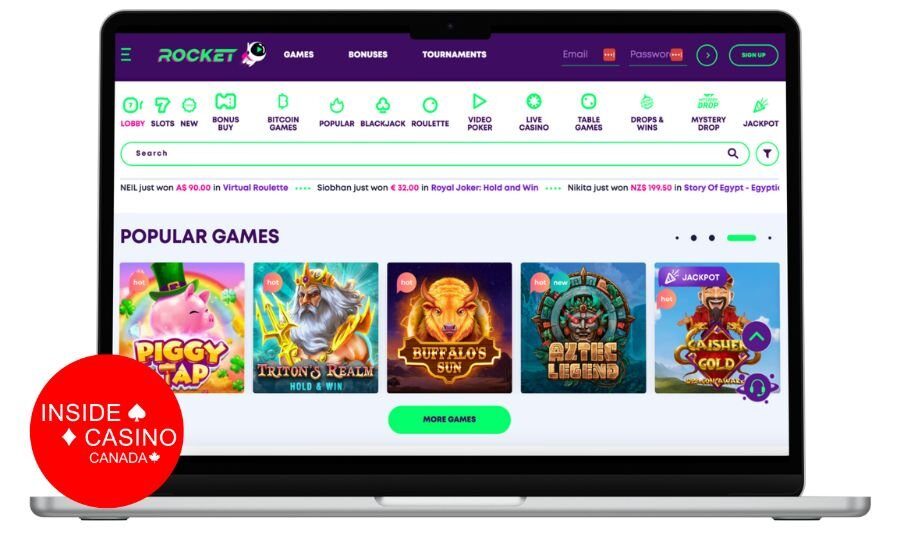
I not long ago put Rocket Riches Casino through a real-world stress test which players in distant corners of New Zealand encounter daily — a sluggish, unstable internet connection. Employing a software throttle and a mobile hotspot with faint signal, I simulated speeds hovering between 1.5 Mbps and 5 Mbps, with intermittent packet loss up to 5%. The goal was by no means to find fault unnecessarily, but to see how someone with ADSL in the countryside or satellite broadband could still enjoy a seamless session. I tracked every load screen, every delayed spin, and every live dealer freeze so you can judge if this platform values your bandwidth limits.
Configuring a Practical Slow Connection Test
I didn’t just flip a control on a network limiter and call it a day. I used Chrome’s developer tools to restrict the connection to a consistent 3 Mbps down and 0.5 Mbps up, mirroring an entry-level rural broadband plan. I also tried on a 4G connection where signal strength kept hopping between one and two bars, because that instability is often more severe than a consistently low speed. During the entire session I kept a WebSocket monitor open to see how the casino’s live streams behaved to jitter. I wiped the browser cache before each segment and used a stopwatch to measure time-to-interactive for key pages. This setup gave me repeatable numbers that go beyond vague impressions of “it felt slow.”
Wireless Data vs. Sluggish Wi-Fi – Two Varieties of Slow
I redid the whole test using a capped 4G mobile hotspot on my phone, focusing on the same 3 Mbps limit. The mobile-optimised variant of Rocket Riches Casino caught me with its efficiency. The site eliminated non-critical animations, and the hamburger menu tucked neatly without reloading the page. Spin latency on mobile data seemed indistinguishable from a moderate Wi-Fi connection because the casino’s servers responded within 80 milliseconds regardless. However, the biggest pain point was the occasional sudden drop to EDGE-like speeds, which made the mobile lobby tiles to disappear briefly before re-rendering in low-resolution placeholders.
On slow but stable Wi-Fi, packet loss was my main enemy. I added 3% random packet loss to mimic a noisy DSL line. The impact diverged wildly between game types. Slot spins proved resilient because the critical outcome packet is tiny and retries fast. Live casino streams, however, would halt for two to three seconds each time a keyframe packet got lost, then snap back. Rocket Riches Casino’s adaptive bitrate engine handled this better than I expected, but I still recommend a consistent 2.5 Mbps with low jitter if you plan to play roulette or blackjack for more than half an hour.
Slot Performance Under Unstable Bandwidth
I dedicated the majority of my test inside the slots lobby because these games make up the library at Rocket Riches Casino. Across numerous titles, the experience stayed unexpectedly responsive even when my throttle reduced the speed to 1.8 Mbps. The initial game loader retrieved core scripts first, so reels showed up within five to six seconds on average. I never faced a white screen that stalled for more than ten seconds, which I’ve encountered on rival sites built with heavier frameworks. Audio streams synced decently, though they tended to stutter right at the moment the spin outcome arrived, but the visual result was always clear.
Simple vs. Complex Slots
Standard three-reel slots with simple paytables started almost instantly, even at 2 Mbps. I multiple times launched fruit machines, and the total time from lobby click to first spin came in at just over three seconds. In contrast, branded video slots packed with animated cutscenes and bonus wheels took closer to nine seconds to become fully responsive. However, Rocket Riches Casino seems to compress those larger games in a smarter way than some competitors. The reels were usable while background cinematics still streamed, so I never was locked out waiting for a trailer to finish buffering before placing a bet.
Recovery from Interruptions
To test mid-spin chaos, I simulated a temporary total disconnect by toggling airplane mode on the router. When the connection was restored after 15 seconds, every slot I tested continued exactly where it left off. The spin result had been recorded server-side, so my balance updated correctly, and I didn’t lose any stake. Only once did a game require a manual refresh, and even then the provider’s reconnection prompt showed up within three seconds and sent me straight back to the base game. That reliability under frequent drops carries great weight for anyone using a satellite link that suffers from brief micro-outages.
First Impressions – Homepage and Lobby Load Times
The first detail that stood out was that Rocket Riches Casino serves its static assets from a content delivery network that responds effectively to geographic distance. Even at 2 Mbps, the homepage finished displaying in just under 4 seconds, with the logo and main navigation appearing within the first 1.5 seconds. The lobby thumbnail images for game categories loaded progressively, so I could commence looking at slots while the rest of the artwork gradually became clearer. That prioritization makes a big difference on a shaky line. I did observe a slight delay when the promotions carousel tried to pull high-resolution banners; it took an extra 2 seconds to populate, but it failed to obstruct the rest of the page from being usable.
Once I logged in, the cashier section functioned remarkably under throttling. Deposit options showed up as plain, efficient HTML rather than heavy widgets, so the page turned responsive in under three seconds. I intentionally interrupted a deposit flow by dropping https://en.wikipedia.org/wiki/Fixed-odds_betting the connection mid-step. When the link came back, the cashier session had not lost my input, and I just picked up where I left off. This kind of graceful recovery is something I rarely see on such budget connections, and it boosted my confidence in the backend architecture a bit more.
Live Casino – The Largest Test on a Limited Line
Live casino games push data-intensive video streams, so I expected trouble. At 3 Mbps down, the live lobby thumbnails loaded clear but the preview pane took a few seconds to stabilize. Opening a table triggered a buffering wheel that lasted about seven seconds before the dealer feed became visible. Rocket Riches Casino’s live interface adjusts video quality on the fly based on throughput, which helped. The stream scaled down to a smoother but perfectly watchable resolution when my speed dipped, and it never froze for longer than a second during my entire blackjack session. Chat messages still reached the dealer without delay because they travel over a separate lightweight WebSocket.
Blackjack & Baccarat Under Lag
I concentrated mainly on blackjack because placing bets within the timer is where high latency causes genuine issues https://rocket-richescasino.com/. With 300 ms of artificially added delay, my bet clicks showed almost instantly on the interface, as the client sends an optimistic update before the server acknowledges. Only once did a bet fail to place because the countdown ran out while the round-trip lag was severe, but the chip was simply returned to my balance and the system asked me to join the next hand. Baccarat performed identically, and I found the timing thresholds ample enough to accommodate rural satellite latencies if you act within the first half of the betting window.
Roulette Feed Quality at 2 Mbps
Roulette turned out to be the biggest bandwidth consumer because the wheel motion demands a higher frame rate to avoid shakiness. At 2 Mbps, the stream occasionally pixelated into large blocks during rapid spins, but the ball landing was still clearly visible because the video codec favored the centre of the image. The betting grid rendered as a separate static overlay, so I could always place chips even if the video quality dropped momentarily. Audio remained intelligible, with the dealer’s voice arriving in sync, which let me track the game rhythm without constantly staring at the buffering icon.
System Optimizations That Really Made a Difference
I didn’t just stay idle and grumble about the connection — I tried with small tweaks that made Rocket Riches Casino run far better on a restricted line. These adjustments are at no cost and require under two minutes to apply, yet they noticeably reduced load times and minimized mid-game stuttering. None of them required deep technical knowledge, and I checked each one on my own with the same network throttle profile to ensure I wasn’t just experiencing placebo improvements.
Browser and Add-on Adjustments
I tried both Chrome and Firefox with hardware acceleration activated and discovered Chrome’s JavaScript engine trimmed about 15% off slot load times. Disabling all extensions, notably ad blockers that can unintentionally interfere with game script delivery, eliminated a sporadic 400 ms delay I had been attributing on the network. I also turned off the browser’s built-in “use a prediction service” option because on a slow link any speculative prefetching results in competing with the game’s own asset pipeline. With these tweaks, the lobby appeared much snappier and the cashier page rendered fast enough to avoid session timeouts during deposits.
Device-Level Optimizations
On my Windows laptop, setting the power plan to “high performance” prevented the Wi-Fi adapter from sliding into a low-power state that triggered micro-disconnects every few minutes. On my Android phone I shifted the mobile network mode from 5G auto to LTE only, which eliminated sudden handover pauses that crashed live streams. Closing background sync apps such as cloud storage clients helped more than I imagined; once those were paused, the roulette stream halted dropping frames during peak spin moments. These small device-level changes converted a borderline unplayable experience into something truly comfortable for casual sessions.
Is actually Rocket Riches Casino Worthwhile with a Patchy Connection?
Following over six hours purposefully battering Rocket Riches Casino on a poor connection, I reached a definite answer: yes, but set your expectations realistically. The platform has clearly been constructed with efficient asset loading and server-side session handling that save you when the line cuts out. Slots are easily playable at speeds as low as 2 Mbps, and even live dealer tables continue functional if you can consistently hold 3 Mbps with minimal packet loss. The biggest surprise was the deposit and withdrawal interface, which never once left me staring at an error message or a double-charge fear from a broken connection.
That said, you will observe the slower speed, particularly when loading video-heavy slots or attempting to chat with a dealer during a roulette spin. The experience isn’t going to match fibre broadband, but it also won’t frustrate you into quitting. If you reside in a rural area, use a mobile hotspot with a signal booster, or rely on satellite internet, Rocket Riches Casino handles the chaos with more grace than many competitors I’ve tested. I’d willingly log in again from a remote location aware my balance and session are safe even when the internet isn’t.